What the Doctor Ordered
A Weaver Portrait — Charlotte Muller, Breathe Strength Yoga Studio
When you walk in through the front door of Pulse Barbell Club in East Northport you feel it; that kind of place that already feels like it knows your name. To the left, just past the front is another door. Behind that one: Breathe Strength Yoga Studio.
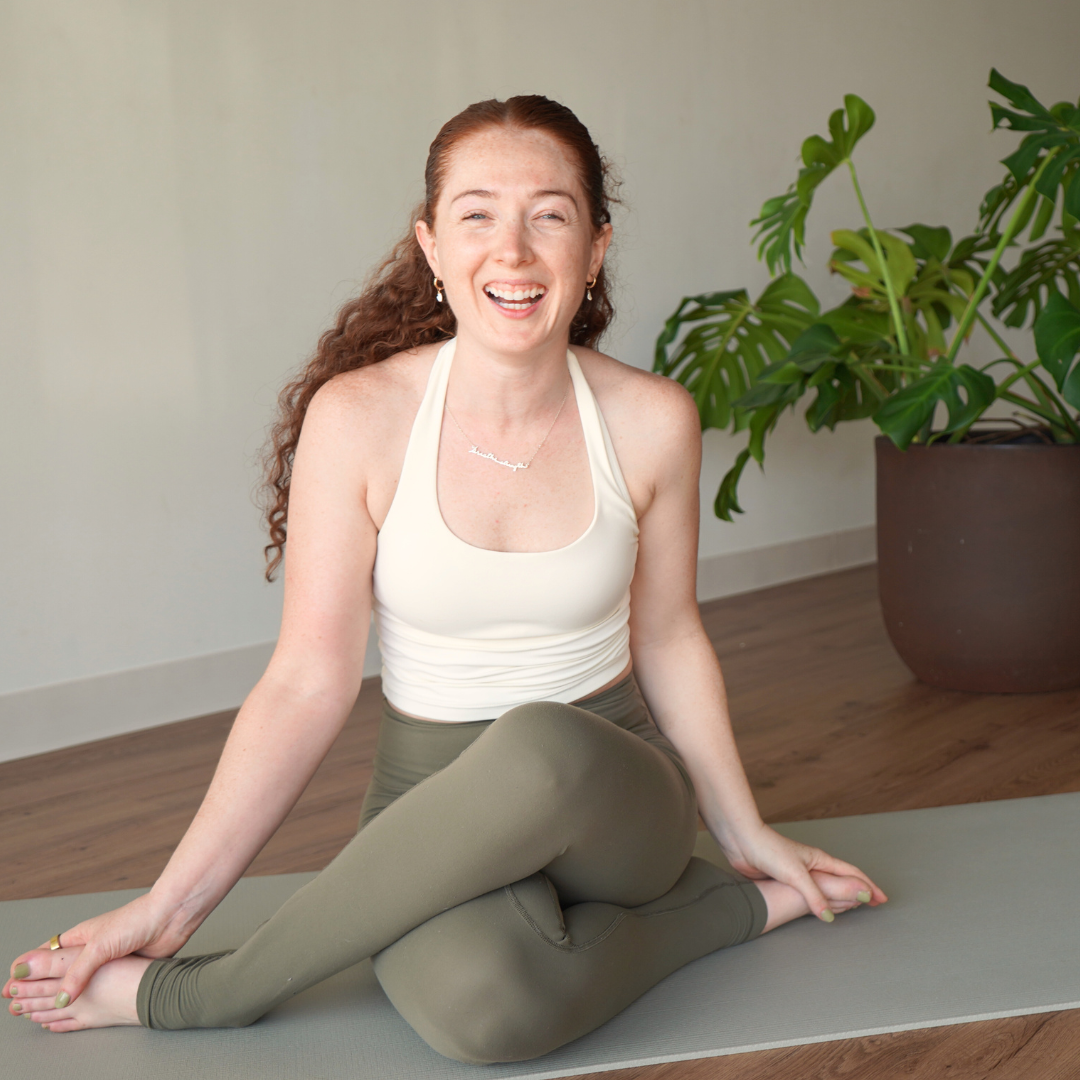
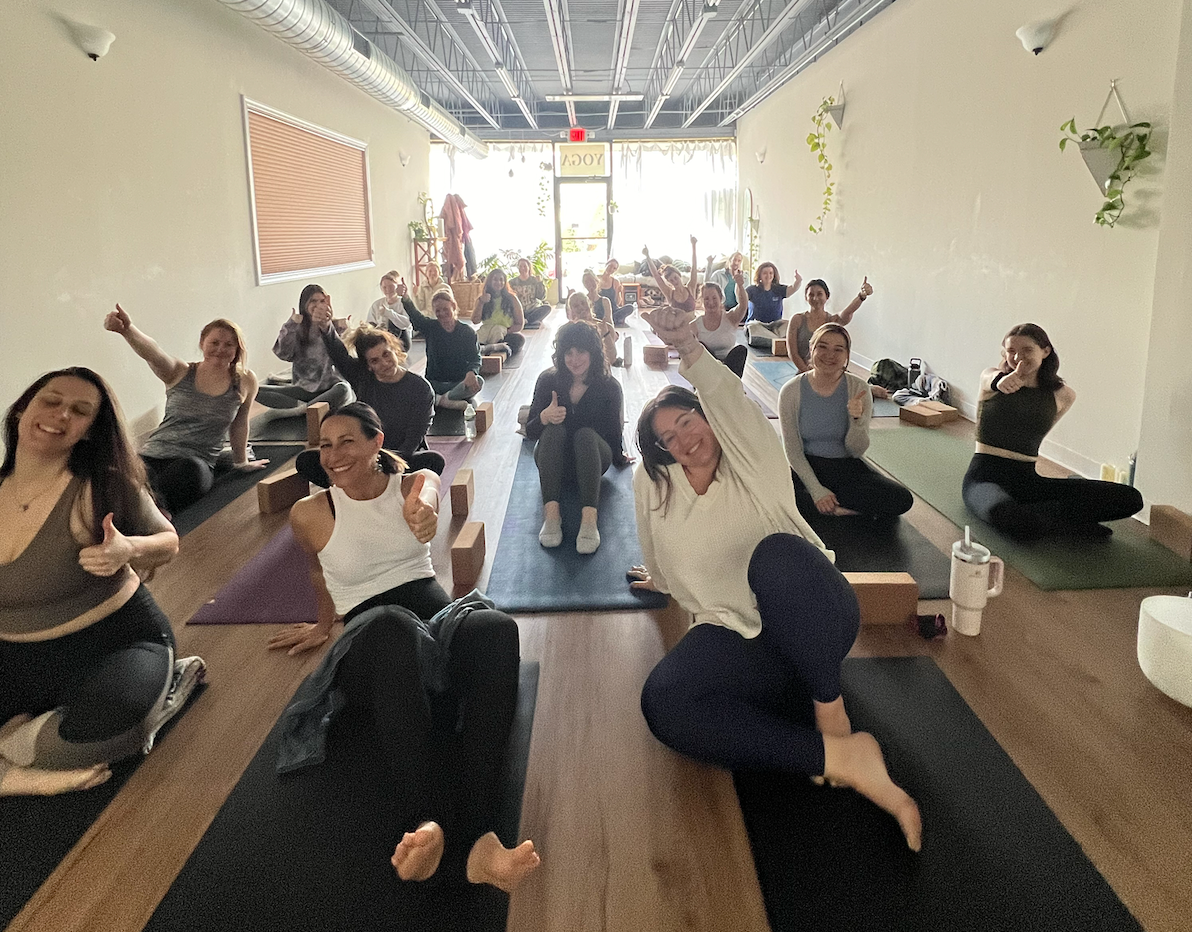
The room is quiet in a way the gym isn't. Floor-to-ceiling glass welcomes in soft light, diffused through a thin curtain bathing the room in warmth. Plants thrive in pots scattered throughout the studio. There’s no mirrors. Nothing asking you to check yourself or your body, just a room asking you to arrive. People are unrolling mats, settling in, and it's warm, and it's welcoming, and none of that happened by accident.
Charlotte Muller built this room. Today she’s eight and a half months pregnant and still teaching in it.
What does it mean to have a space like this? How do we measure its value? Is it revenue per square foot? Return on investment? Every morning, Charlotte checks a number. How many people signed up for class that day, weighed against what she owes her teachers and coaches. Her system shows her green or red. It's the simplest metric there is: did today break even. Green light or red light. But it's not the number that explains what this room actually does for the people who walk through it, for her business, and for her.
To understand that, you have to look at how she actually uses the space. Walk it with her — a few different times, from a few different angles.
Space to run the business
At Breathe Strength's first location in Astoria from 2019-2021, market access was almost effortless. "The studio grew because of the location, foot traffic," Charlotte says. "The niche was there." She assumed her new East Northport, opened in 2021, would follow the same growth trajectory. It didn’t. "I was like, 'this is going to be a breeze to grow…We're still trying to figure out who we serve."
Her first issue? That foot traffic and an easy, casual pedestrian visibility in urban Astoria, Queens doesn’t exist in the infrastructure of suburban East Northport where car transportation affords only seconds to grab a driver’s attention as they speed by to an appointment down the road. As she reflected, “Just because one location of my business grew so fast and easily doesn’t mean it’s always going to be.”
What expanded her market access wasn't more space of her own, it was collaboration. Joining forces with her husband's gym, Pulse Barbell Club, gave her something a physically bigger studio never would have given her: less pressure to immediately figure out how to navigate the shift. "I definitely hustled, burnt myself out," she says. "But collaboration with businesses can bring a lot of freedom.” It took her nearly two years in East Northport to actually feel she’s finding her customer base. "Riches are in the niches," she says now. The more precisely she defines who she's serving, the stronger the turnout. Trying to be everything for everyone gets her the opposite and through collaborative physical space she has been able to find her way through.
The wall
Breathe Strength shares a physical wall with Pulse. The same proximity which eased the financial pressure in her work can sometimes that same work harder. It can be difficult to "turn the thoughts off because I hear the loud music or the weights being dropped." Asked what one more room would give her, she didn't picture a bigger studio. She pictured somewhere minimal, quiet, and hers. A simple space where she would be “able to rest and recharge, so you have the energy to keep moving forward with creativity and new idea.”
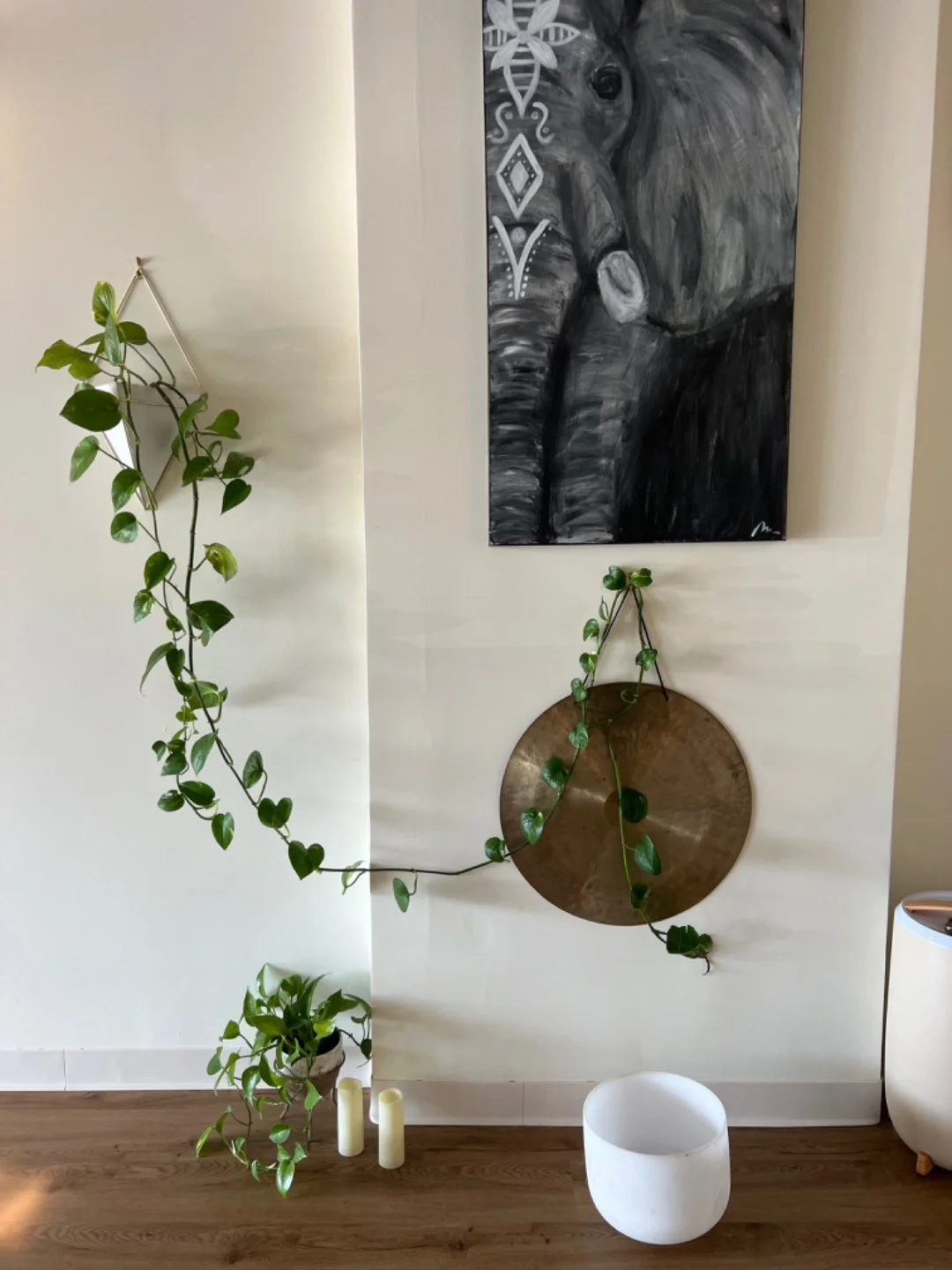
”During and after meditation... when I'm disconnected from technology... that's when the magic happens.” Even her answer to a hypothetical extra space circles back to the wall. If funding were never an obstacle, she wouldn't leave Pulse. She'd just want her own entrance or floor of the building like "a little bit of a separate entity, like a separate identity.” Proximity, but with the gym’s rhythms beside or underneath it. The physical wall, on one side a yoga studio painted murals and dotted with plants, the gym side holding equipment and movement charts, holds two things offering real support and a breath to grow beside one another growing stronger together.
The room on a screen
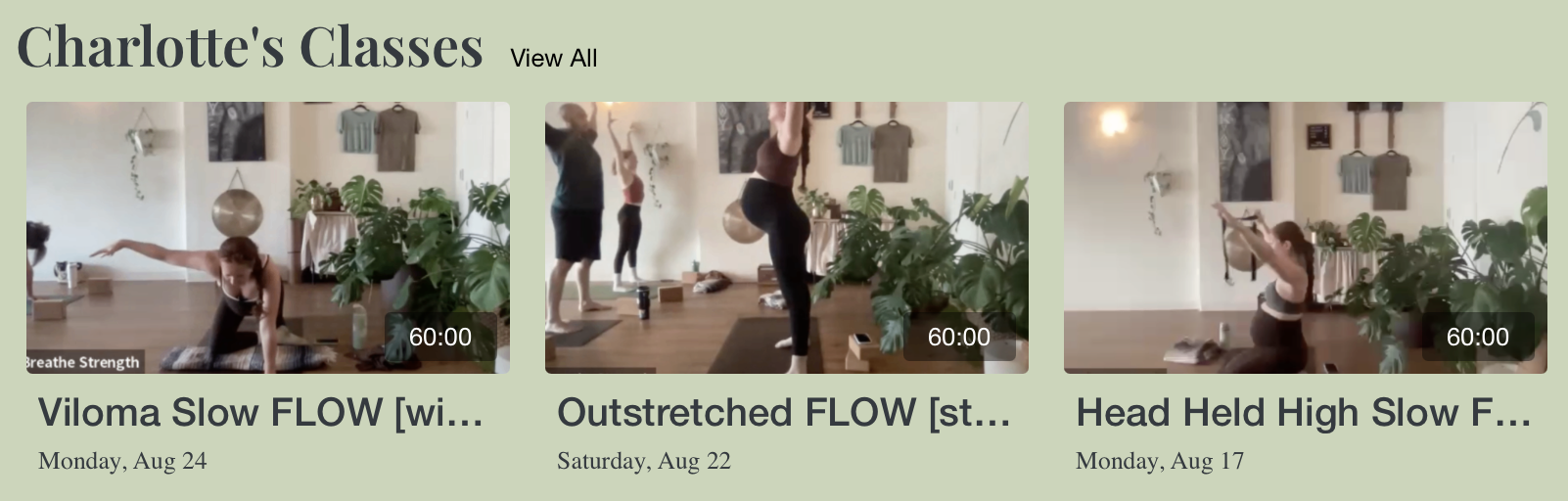
When the physical room isn't enough Charlotte livestreams her classes for students to view later or remotely during class. It's a skill she taught herself, unprompted, out of necessity. This "technological weaving," as she calls it, brings technology into a physical studio because she was curious enough to just figure it out.
Where the skill actually shows up became clear while talking it through with her. In person, a teacher can feel the floor is wet from rain, sense the air go heavy before a storm, or adjust an entire class flow on a cold morning without saying a word. None of that carries through a screen. Every person watching digitally is having a different class than the person virtually next to them, shaped by whatever room they're actually sitting in. Digital space isn't a replacement for physical space. It's a translation from a tangible experience to an intangible one, and one constantly at work. How to transport a grounding spiritual practice to another uncontrolled environment is an ever-evolving skill set Charlotte continues to better.
The loop
But physical space isn’t just the floor, or the mats, or a class on a screen. Ask Charlotte what compliment from a customer she most replays in her head, and she doesn't talk ease of scheduling or class variation. She talks about one specific student, a regular, someone she immediately pictures as she says it, who tells her the same thing after nearly every class: "just what the doctor ordered."
And that's the room doing the thing none of the other metrics quite capture. It’s not generating revenue per square foot. It’s holding someone well enough, consistently enough, that they come back and say it again. And that return visit isn't just a data point, it's what lets Charlotte keep doing this, which is what lets the physical room keep working, which is why the woman comes back and says it again. A loop, feeding itself over and over again. Nothing in a spreadsheet is built to see that kind of loop. Spreadsheets see events, counted once or repeat clients reflected as only a number flattening the loop. But this isn't an event. It's the thing that makes the events keep happening.
What This Teaches Us
If you measured Breathe Strength by revenue per square foot, you'd capture exactly one of these things and miss the rest entirely. You wouldn't see the wall that gives with one hand and takes with the other. You wouldn't see the unsolved problem and skill development in teaching through a screen. You wouldn't see a business owner whose real daily number isn't exponential growth, it's whether today broke even so she can come back and hold her community. And you'd never get anywhere near the reason a regular keeps coming back.
This isn't an argument against measuring things. We need numbers for rent, for payroll, for knowing if today worked. Rather it's an argument for a second kind of attention alongside them. We need to notice when a resource pool is doing more than one job at once, and when the most important thing happening in a room isn't a countable event at all, but a loop that either stays healthy or quietly breaks.
There's a version of this same pattern in the geography around her, too. Long Island wasn't built for walking the way Astoria was. A five-mile drive can take twenty minutes, and that gap decides who shows up before a business ever gets the chance to earn them. Standard metrics don't see that either. They see whether a business grew. They don't see the terrain it had to grow across. And that this a problem not so easily solved.
Charlotte defined success as fulfillment, connection, freedom. Not one of those shows up on a rent roll. All of them show up in how she uses a room and in the one, specific, recurring thing a student says on her way out the door. “Just what the doctor ordered.”
